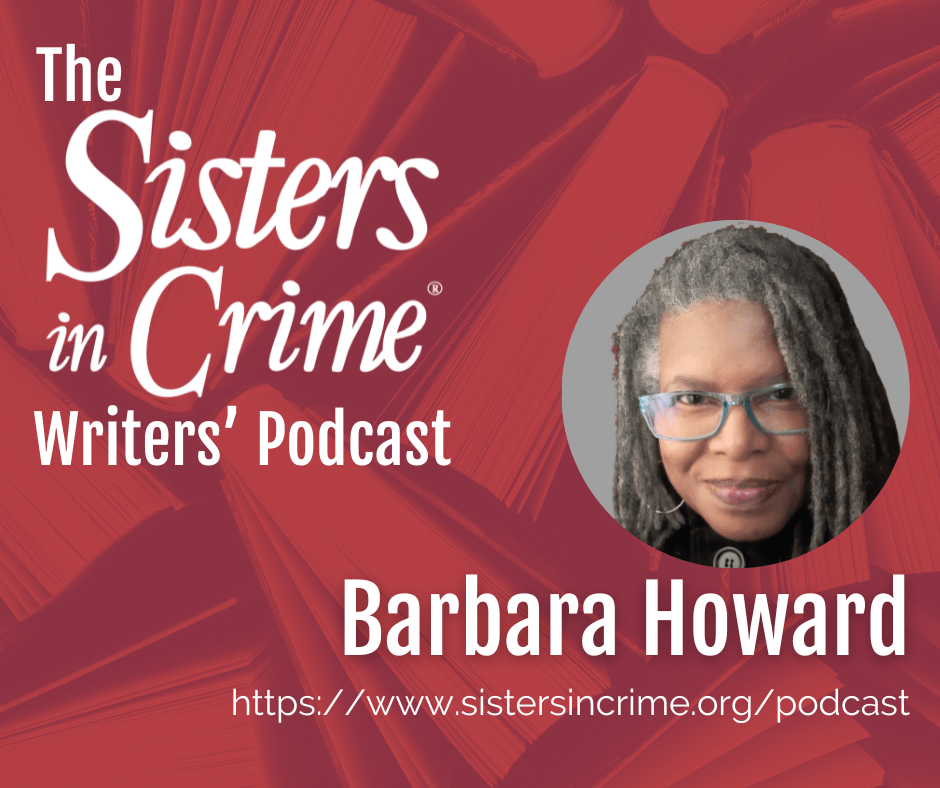
Barbara Howard on Sisters in Crime Writers’ Podcast

I had the awesome privilege of being a guest on the Sisters in Crime Writers’ Podcast. The interview was fun and covered many topics that are near to the hearts of both indie and traditionally published authors. Sisters in Crime (SinC) is one of the top international organizations chosen by crime fiction authors in search of community, resources, and industry news. You can hear the full interview wherever you listen to podcasts or follow this link to the Sisters in Crime Writers’ Podcast page.

How Do I Balance Description With Action In My Writing?

Balancing description with action in writing is akin to orchestrating a delicate dance where both partners—the narrative details and the dynamic events—move in harmony. Effective storytelling hinges on finding the sweet spot between vivid descriptions that paint a sensory-rich scene and the kinetic energy of action propelling the plot forward. Too much emphasis on description can bog down the pace, while an excess of action may leave the reader disoriented. Striking equilibrium involves interweaving descriptive elements seamlessly into the action, allowing readers to visualize scenes without sacrificing momentum. This integration ensures that every detail serves a purpose, contributing to character development, setting the mood, or propelling the narrative.

In this delicate ballet, consider embedding descriptive elements within the action itself. Instead of presenting a static scene description, infuse it with movement and purpose. For instance, instead of a standalone depiction of a room, describe the protagonist navigating through it, interacting with the environment. This not only maintains the narrative’s flow but also invites readers to experience the setting in motion. Strike a judicious balance, letting the pace ebb and flow naturally, creating a dynamic reading experience where description and action harmonize to propel the story forward.

How Do I Write Effective Foreshadowing?

Foreshadowing is important in your story since it gives it depth and suspense. With that small poke, readers receive a taste of what’s to come, whetting their hunger for more. So how can you become an expert at foreshadowing?

Consider foreshadowing at first as a trail of crumbs. Readers gladly follow the intriguing, covert cues you provide along the way, like breadcrumbs. Drop hints that will later be related to important narrative twists or revelations early on in your novel. These clues might be a character’s mysterious past or a seemingly unimportant item that becomes crucial as the plot progresses. The secret is to make careful, rational decisions.

Second, think about the genre and tone of your work. The environment you’ve established should be effortlessly incorporated into any foreshadowing. While it could take on a more menacing tone in a dark thriller, it might entail charming, unobtrusive clues in a cozy mystery. To make your foreshadowing seem like a natural part of the plot, stay loyal to the tone of your story.

Last but not least, keep in mind that foreshadowing is a craft that frequently manifests itself during edits. You’ll find opportunities to improve your foreshadowing as you edit your book. Be flexible in order to improve your storytelling. When used skillfully, foreshadowing may transform your story into a thrilling quest for knowledge that will leave your readers wanting to learn the mysteries you have weaved into your plot.

How Do I Handle Subplots In My Writing?

Hello, wonderful book lovers! The question of how to manage subplots in my work is one that’s frequently asked, and since you’ve been with me on this amazing writing adventure, I felt it was about time we have a nice discussion about it. The key is to strike the ideal balance.

Subplots are like the seasonings in a meal; they give the main course character and complexity. Whether it’s illuminating a character’s past, adding an exciting twist, or examining a new perspective of the story’s topic, each one should have a distinct purpose. Subplots are those fascinating side storylines that make reading more enjoyable. Like a skilled cook, I also aim for the ideal balance.

Your tale may seem flat if there are too few subplots. While an abundance of them might be overpowering. In order to make sure they support the main storyline, improve character development, and add to the broader narrative tapestry, you need to carefully evaluate each one. Creating a story that is as rich and gratifying as a favorite home-cooked meal is all about harmony. I appreciate you joining me on this beautiful journey.

Cheers!

How Do I Handle Multiple Points Of View In My Novel?

It could be beneficial to manage many points of view (POVs) in a novel in order to explore various characters’ points of view and construct a deeper, more complicated story. However, it could also be a challenging undertaking that requires careful planning and execution. The following guidance will assist you in handling the variety of viewpoints in your book:

First, each POV character must have a certain purpose. Each character’s individual voices, personalities, and storylines should provide depth to the broader tale. Consider the rationale for choosing these specific characters to tell the story as well as the contributions they make.

Keep your consistency and clarity, second. Chapter breaks or section headers with the character’s name might be used to clearly indicate the change in POV. Readers will traverse the switches more easily if you are consistent in how you manage each POV, such as by keeping the tense and narrative style the same for each character.

Balance is ultimately the secret to handling numerous POVs well. Avoid overcrowding the story with views that can confuse or weaken the narrative by making sure that each character’s perspective contributes to the overarching plot and theme. The use of several points of view may improve your story and provide readers a more immersive and compelling experience with proper preparation and an emphasis on character development.

How Do I Create A Unique And Memorable Voice For My Protagonist?

Photo by cottonbro studio on Pexels.com

A distinctive voice for your protagonist is a delicate art that may distinguish your tale and have a profound impact on readers. To discover what influences your character’s viewpoint, start by exploring their history, personality, peculiarities, and experiences. Consider their terminology, speaking habits, and emotional expression; these subtleties may reveal a lot about who they are. Further amplifying their voice is the use of distinctive metaphors, similes, and idioms that represent their worldviews.

Additionally, adopting first-person or close third-person viewpoints may provide readers immediate access to your protagonist’s thoughts and emotions, enabling them to engage with the character on a more personal level. Focus on maintaining their voice’s continuity; even when they change, their tone, diction, and way of speaking should stay constant.

How Do I Keep My Writing Engaging Throughout The Entire Novel?

To keep the writing compelling throughout the whole novel, a combination of careful planning and skillful execution is necessary. If authors want to keep readers’ attention from the first chapter to the last, they must focus on developing compelling characters, intriguing plotlines, and captivating locations. By following a well-rounded protagonist with realistic traits and flaws, readers may get emotionally invested in the story’s conclusion. To keep the tale intriguing and the audience wondering, subplots are intertwined, and unexpected twists are included. Writing descriptive and sensory-rich descriptions of locations and scenes may provide a more immersive reading experience. Last but not least, speed is essential; alternating between tense and contemplative passages may create a consistent flow and make readers want to keep reading.

How Do I Keep My Writing Engaging Throughout The Entire Novel?

Photo by Samson Katt on Pexels.com

Every writer aims to master the delicate ballet of establishing and retaining involvement across the course of a novel. The secret is to use complex storytelling tactics, well-rounded characters, and a keen sense of timing. Start by developing a compelling hook in the first few pages that pulls readers right into the action of your story. This first scene establishes the tone for the remainder of the book, whether it be through a provocative query, a mysterious occurrence, or a vivid description. As soon as you get their attention, strike a careful balance between exposition and action, incorporating pertinent information about the scene and the characters while yet keeping the story going.

Characters must be engaging if readers want to remain engaged. To entice readers to feel emotionally invested in the characters’ exploits, develop interesting and sympathetic protagonists and antagonists. Create your characters’ goals, character flaws, and growth arcs so they seem like genuine individuals facing real issues. To make your readers care about the characters’ victories and empathize with their setbacks, fully immerse them in their experiences. The personal atmosphere that is evoked by the book’s vibrant talks, inner monologues, and character interactions allows readers to form deep ties that extend beyond the pages.

Pacing is the silent orchestrator of engagement, dictating the ebb and flow of tension and release. Experiment with a rhythm that alternates between moments of high drama and quieter introspection, enabling readers to catch their breath while remaining eager for what’s next. Effective pacing not only maintains engagement but also enhances the impact of climactic scenes. Employ cliffhangers, twists, and revelations strategically, leaving readers eager to turn each page. By refining these storytelling elements and embracing a constant evolution of plot and emotion, writers can weave a tapestry of engagement that keeps readers spellbound from the opening line to the final sentence of their novel.